
Advanced and Nano Materials in Railway Accessories: Reducing Wear and Increasing Durability
- RAYKON

- Mar 31
- 3 min read

Introduction
The railway industry is a backbone of modern transportation, requiring high levels of safety, efficiency, and reliability. One of the major challenges faced by operators and maintenance teams is the wear and tear of accessories and consumable components, such as bearings, washers, bolts, and lubricants.
Recent advances in high-performance materials and nanotechnology have revolutionized the way railway accessories are designed and maintained. These materials help reduce friction, increase durability, and optimize the lifespan of critical components, resulting in fewer unscheduled downtimes and lower operational costs.
This article explores the applications, benefits, challenges, and real-world examples of using advanced and nano materials in railway accessories, providing insights for engineers, operators, and rail industry stakeholders.
1. Advanced Materials in Railway Accessories
Advanced materials include metallic alloys, ceramics, composites, and engineered polymers designed for high resistance to wear, heat, and corrosion.
Key Applications:
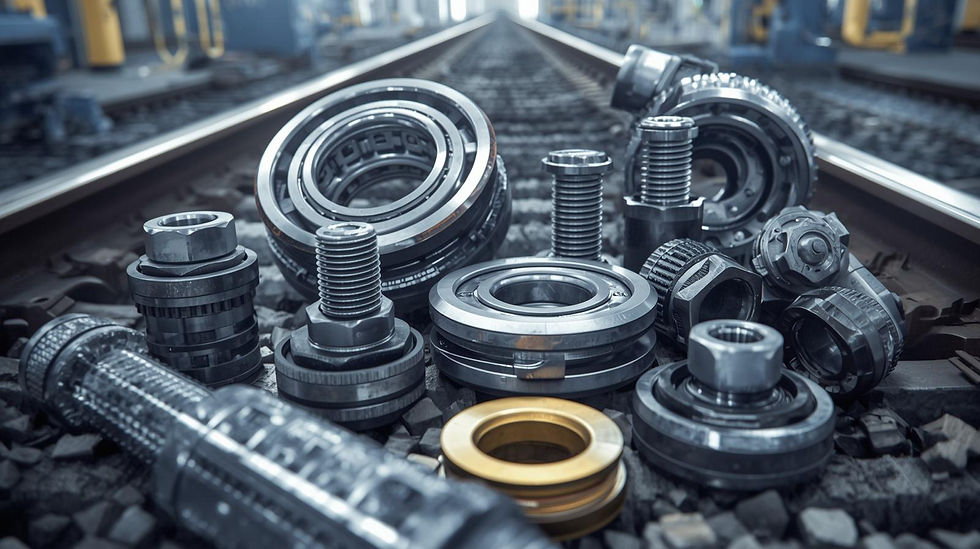
Coated Bearings: Bearings with wear-resistant alloys increase wheel and axle lifespan and reduce the need for frequent lubrication.
Reinforced Polymer Washers: Fiberglass or nanocomposite-infused washers provide higher load tolerance and mechanical stability.
High-Strength Bolts and Fasteners: Corrosion-resistant bolts with heat-resistant coatings are ideal for harsh environmental conditions.
These materials ensure reliable performance under extreme stress and minimize maintenance cycles, improving operational efficiency.
2. Nanotechnology and Its Applications
Nanotechnology introduces unique properties that traditional materials cannot achieve, such as enhanced surface hardness, reduced friction, and self-lubricating capabilities.
Practical Uses in Rail Accessories:
Nano Lubricants: Incorporating nanoparticles in greases reduces friction between wheels and rails, lowers heat generation, and extends bearing and axle life.
Nano-Coatings: Protective nanostructured coatings on components enhance wear and corrosion resistance, reducing the frequency of replacement.
Nano-Composite Components: Washers, seals, and polymer components infused with nanoparticles withstand extreme environmental conditions including temperature fluctuations, moisture, and dust.
Nano Sensors: Some components are equipped with nanosensors to monitor wear, temperature, and stress, enabling predictive maintenance and reducing unexpected failures.
These technologies allow rail operators to maximize asset longevity while minimizing operational risks.
3. Benefits of Advanced and Nano Materials
The adoption of these technologies offers significant advantages:
Extended Component Lifespan: Reduced wear leads to fewer replacements and lower maintenance costs.
Energy Efficiency: Reduced friction decreases energy consumption in train operations.
Enhanced Safety: High-performance materials minimize the risk of component failures and derailments.
Operational Reliability: Predictive maintenance enabled by nano sensors prevents unscheduled downtime.
Environmental Benefits: Reduced use of lubricants and consumables lowers chemical waste and environmental impact.
4. Challenges and Solutions
Despite the benefits, implementing advanced and nano materials in railway accessories presents some challenges:
High Initial Costs: Nano-enhanced components are more expensive upfront but reduce long-term maintenance costs.
Limited Industry Knowledge: Specialized training is required for maintenance personnel to handle these advanced materials.
Standards Compliance: New materials must meet international and national rail safety standards.
Solutions:
Conduct targeted training programs for engineers and technicians.
Collaborate with certified and experienced suppliers.
Run field tests before full-scale deployment to ensure optimal performance.
5. Real-World Applications and Case Studies
Urban European Rail Lines: Nano lubricants reduced wheel wear by 30% and energy consumption by 20%.
Underground Tunnel Washers: Nano-reinforced polymer washers doubled service life compared to conventional materials.
Freight Train Bearings: Nano-coatings decreased emergency maintenance and improved reliability of high-load freight operations.
These examples demonstrate that investment in nano and advanced materials translates into tangible operational, economic, and safety benefits.
6. Future Trends
Smart Nano Components: Integration of IoT-enabled nanosensors for continuous monitoring.
Sustainable Materials: Biodegradable and eco-friendly nano composites for environmentally-conscious rail networks.
AI-Driven Maintenance: Predictive algorithms using sensor data to optimize replacement schedules.
The combination of nanotechnology, advanced materials, and smart maintenance systems is set to redefine the future of rail infrastructure.
Conclusion
The use of advanced and nano materials in railway accessories represents a critical step toward reducing wear, increasing durability, and enhancing operational efficiency.
Rail operators can benefit from:
Longer component lifespans
Reduced maintenance costs
Improved safety and reliability
Lower environmental impact
By strategically adopting these technologies and integrating them with predictive maintenance, the railway industry can achieve a more sustainable, efficient, and safe transportation system.
This article was researched and written by RAYKON
The use of this article is permitted by citing the source.
📩 Get in Touch
📧 Email: info@raykonrail.com
🌐 Website: www.raykonrail.com
Location: Maltepe Piazza, Cevizli, Tugay Yolu Cd. No: 69/A, 34846 Maltepe/İstanbul


Comments